
Rating agencies Crisil and Icra on Monday revised down their India growth projections for the current fiscal and the second quarter mainly due to the ripple effect of slowdown in global growth and mixed crop output. Crisil downgraded the India growth forecast by 30 bps to 7 per cent while Icra pegged the economic expansion at 6.5 per cent for the second quarter of FY2022-23. "We have revised down our forecast for real gross domestic product growth to 7 per cent for fiscal 2023 from 7.3 per cent, primarily because of the slowdown in global growth that has started to impact our exports and industrial activity.

Rinku Singh stole the show with as he guided Kolkata Knight Riders to a thrilling three-wicket win over Gujarat Titans in Ahmedabad on Sunday.

She's living her best days as the newest Ambani bride-to-be.
The wholesale price-based inflation spiked to 12.54 per cent in October, mainly due to rise in prices of manufactured products and crude petroleum. WPI inflation has remained in double digit for the seventh consecutive month beginning April. Inflation in September this year was at 10.66 per cent, while in October 2020 it was at 1.31 per cent.

A 'Go To' man in Kolkata Knight Riders for more than a decade, Sunil Narine will have to play out of his skin to justify his place in the playing eleven when his team takes on Punjab Kings in a must-win Indian Premier League game in Kolkata on Monday.

On paper, though, PBKS looks a tad more stronger than KKR.

As COVID-19 infections spike in the country resulting in restrictions in various states and impacting the fragile recovery, many economists are expecting RBI to delay the policy normalisation move, which is expected in the February review. The country has reported a single-day rise of 58,097 new Covid-19 cases as of Wednesday morning--the highest in around 199 days -- of which 2,135 are Omicron cases and later in the day, the first confirmed Omicron-related death has also been reported. Maharashtra recorded the maximum number of 653 Omicron cases followed by Delhi at 464, Kerala 185, Rajasthan 174, Gujarat 154 and Tamil Nadu 121 cases, taking the total tally of cases to 3,50,18,358.
This may come as a surprise to many. Retail price inflation in petrol was the lowest at 10.21 per cent in March since November 2020. In diesel, it scraped the bottom of the barrel at 5.19 per cent in the last month of 2021-22 since February 2020. Even liquefied petroleum gas (LPG) was at a nine-month low of 9.97 per cent in the month.

After raising interest rate by a cumulative 250 basis points in 11 months, the Reserve Bank of India (RBI) on Thursday unexpectedly kept benchmark rate unchanged as global banking woes added uncertainty to the economic outlook. Five out of six members of MPC voted to remain focused on the withdrawal of accommodation to ensure inflation aligns with target while focusing on growth, RBI Governor Shaktikanta Das said on Thursday. The Monetary Policy Committee of the central bank decided to take a pause after a rate hike seen in previous six consecutive policies.

One hundred and forty nine new individuals joined the rich list club of 1,103 Indians across 122 cities who cumulatively accumulated a wealth of Rs 100 trillion. Bengaluru -based Kaivalya Vohra, 19, of grocery delivery application Zepto is the youngest self-made and the youngest rich individual, according to IIFL Wealth Hurun India Rich List 2022. The report found 1,103 Indians with a networth of Rs 1,000 crore each - an increase of 62 per cent over five years. There are 221 billionaires (Rs 100 crore networth) in India on the 2022 list - down 16 compared with last year, while 13 people born in the 1990s made it to the list, all self-made.

The Union government could target a fiscal deficit of 5.8-6 per cent of nominal GDP for 2023-24, and it should continue its capital expenditure push and look to simplify the personal income tax regime, economists recommended Finance Minister Nirmala Sitharaman and her team during their pre-Budget interaction on Monday. Starting last week, Sitharaman had eight pre-Budget consultations this time. More than 110 invitees representing seven stakeholder groups participated in these meetings, the finance ministry said in a statement. The stakeholder groups included representatives and experts from agriculture and agro-processing industry; industry, infrastructure & climate change; financial sector and capital markets; services and trade; social sector; trade unions and labour organisations; and economists.
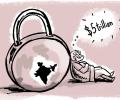
It would be a difficult task for the Indian economy to reach the $5-trillion mark a year before the International Monetary Fund (IMF) projection of 2026-27. Pankaj Chaudhary, minister of state for finance, said in the Rajya Sabha on Tuesday that the government is taking steps to make the country a $5-trillion economy at a date earlier than the IMF's projection. In that context, it would not be difficult to meet the projection in the third quarter of FY27.

Chandrakant Pandit is ready to mould himself within permissible limits when he dons the hat of Kolkata Knight Riders' head coach in IPL 2023.

Doeschate returns as KKR fielding coach
The wait for India to become a $5-trillion economic powerhouse by 2024-25 (FY25) is going to take longer than what the finance ministry had originally intended, according to the International Monetary Fund (IMF). The vision will instead be achieved in 2028-29 (FY29), reveals the IMF data, illustrating a four-year delay. Chief Economic Advisor (CEA) V Anantha Nageswaran had in February said India would become a $5-trillion economy by 2025-26 or the following year, on the back of 8-9 per cent sustained growth rate in real gross domestic product (GDP). However, the IMF data conveys that the economy will be $4.92 trillion in FY28, clearly alluding to the fact that the target will be realised in FY29.

'We should look at is full year's growth rather than quarter numbers.'

The wholesale price-based inflation in February rose to 13.11 per cent on hardening of prices of crude oil and non-food items, even though food articles softened. After two months of mild easing, WPI inflation accelerated in February and remained in double digits for the 11th consecutive month, beginning April 2021. WPI inflation last month was 12.96 per cent, while in February last year, it was 4.83 per cent. The rise in crude oil and natural gas prices after the Russian invasion of Ukraine, beginning February 24, has put pressure on the wholesale price index, even though food articles saw softening across categories of vegetables to pulses to protein-rich items.

Maharashtra Minister Aaditya Thackeray on Thursday said the process of setting up a single planning authority for Mumbai is underway.

Suyash battles through Delhi cricket politics to shine in IPL

India's gross tax collections soared to a record high of Rs 27.07 lakh crore in the fiscal year ended March 31, led by impressive growth in corporate tax and customs, taking the tax-to-GDP ratio to an over two-decade high of 11.7 per cent, Revenue Secretary Tarun Bajaj said on Friday.

In a double delight, retail inflation eased to a one-year low of 5.72 per cent - staying below the upper tolerance limit for two months in a row, while factory output rose sharply to 7.2 per cent on the back of healthy growth in manufacturing. The retail inflation numbers based on Consumer Price Index (CPI) will provide some room for the Reserve Bank to further moderate the quantum of hike in key interest rate or even press a pause button. The RBI has been on a rate hiking spree since May 2022 in its bid to tame inflation, having raised the repo rate by a cumulative 225 basis points (bps).

Former captain Wasim Jaffer made full use of an early reprieve to score 80 as hosts Mumbai reached 262 for seven against Bengal at stumps, on the first day of their Ranji Trophy group league match at the Brabourne Stadium.

Production of eight infrastructure sectors expanded by 3.8 per cent in December 2021 against a 0.4 per cent contraction in the same month last year on better show by coal, cement and refinery products, according to the official data released on Monday. Barring crude oil and steel, all sectors recorded positive growth in December 2021. The core sector industries had grown by 3.4 per cent in November 2021.

The wholesale price-based inflation rose for the second consecutive month in February to 4.17 per cent, as food, fuel and power prices spiked. The WPI inflation was 2.03 per cent in January and 2.26 per cent in February last year. After witnessing months of softening of prices, the food articles in February saw 1.36 per cent inflation. In January it was (-) 2.80 per cent.

The Union government's fiscal deficit works out to be Rs 5.47 lakh crore or 36.3 per cent of the budget estimates at the end of October 2021 on the back of improvement in revenue collection, according to the data released by the Controller General of Accounts (CGA) on Tuesday. The deficit figures in the current fiscal appear better than the previous financial year when the gap between expenditure and revenue had soared to 119.7 per cent of the last year's Budget Estimates (BE) mainly on account of a jump in expenditure to deal with the COVID-19 pandemic. In absolute terms, the fiscal deficit was Rs 5,47,026 crore at the end of October, the CGA said.

KKR players have begun checking-in for a week-long mandatory quarantine.

With the first quarter gross tax mop-up reaching Rs 5.6 lakh crore, Icra Ratings on Friday said the government is set to exceed the budgeted tax collection target of Rs 22.2 lakh crore for 2021-22, led by indirect taxes. The government has budgeted a modest 9.5 per cent growth in tax collections at Rs 22.2 lakh crore for FY22, over FY21 collections of Rs 20.2 lakh crore. However, despite the second wave of the pandemic, the April-June quarter tax collections rose to Rs 5.6 lakh crore, which is 39 per cent higher than Q1 of FY20.

'...only if we sort it out with Pakistan.'

A ramp-up in COVID-19 vaccination, healthy advance estimates of kharif (summer) crop and faster government spending were the factors which led to the revision, the agency said in a statement. It can be noted that after the 7.3 per cent contraction in 2020-21, there were expectations of a higher growth number in 2021-22.

'An eerie similarity with 2019 inflation trajectory could now mean that the RBI and market inflation estimates could go awry.'

However, Icra Rating Principal Economist Aditi Nayar feels that the numbers are a bit too optimistic and need real heavy-lifting by the Centre and the states. "The survey forecasts on real and nominal GDP will require a substantial push from Central and state spending as private sector capacity expansion is anticipated to be intermittent, and sector-specific in the next couple of quarters," she said. Nayar added that private consumption is likely to chart a differentiated recovery across income and age groups. Based on the comments made in the Survey, she expects the Union Budget to incorporate a growth in gross tax revenue of 15-16 per cent.

Exports in June rose by 23.52 per cent to $40.13 billion while the trade deficit ballooned to a record level of $26.18 billion mainly due to jump in gold and crude oil imports, the government data said on Thursday. The country's export growth in May was 20.55 per cent. Imports expanded by 57.55 per cent to $66.31 billion in June compared to the year-ago month, the data showed.

'They are worried that the BJP government is trying to reduce Kashmiris as a minority.'

Indian society may be more advanced than we think it is, notes Ajit Balakrishnan.

Nayar recalled the sacrifices that Karthik had to make, right from virtually staying away from home 200 days a year to booking his own ground, practice sessions and paying net bowlers from his own pocket.


Retail inflation softened to 6.71 per cent in July due to moderation in food prices but remained above the Reserve Bank's comfort level of 6 per cent for the seventh consecutive month. With retail inflation continuing to remain high despite a fall in prices of vegetables and edible oils, among other commodities in July, the Reserve Bank of India (RBI) might go for another rate hike in September. The Consumer Price Index (CPI) based retail inflation was at 7.01 per cent in June and 5.59 per cent in July 2021. It was above 7 per cent from April to June this fiscal.

'We do realise it is time to have a larger ambition.'

The output of eight core sectors grew by 16.8 per cent in May, mainly due to a low base effect and uptick in production of natural gas, refinery products, steel, cement and electricity, official data released on Wednesday showed. The eight infrastructure sectors of coal, crude oil, natural gas, refinery products, fertilisers, steel, cement and electricity had contracted by 21.4 per cent in May 2020 due to the lockdown restrictions imposed to control the spread of the COVID-19 infections. In March this year, these key sectors had recorded a growth of 11.4 per cent, and 60.9 per cent in April.
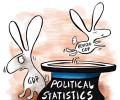
The GDP growth is estimated to come at the "deceptively high" level of 20 per cent for the April-June 2021 quarter but is far below the same in the pre-COVID times, rating agency Icra said on Wednesday. Icra said the low base of the last year, when the GDP had contracted by close to 24 per cent, "conceals" the impact of the second wave of COVID-19 infections. Economic activity is boosted by robust government capital expenditure, merchandise exports and demand from the farm sector, it said, estimating the GDP to grow by 20 per cent and the gross value added (GVA) will register a growth of 17 per cent for the June quarter.
 © 2026 Rediff.com - Advertise with us - Disclaimer - Privacy Policy - Sitemap - Feedback - About us - Terms of use - Grievances